
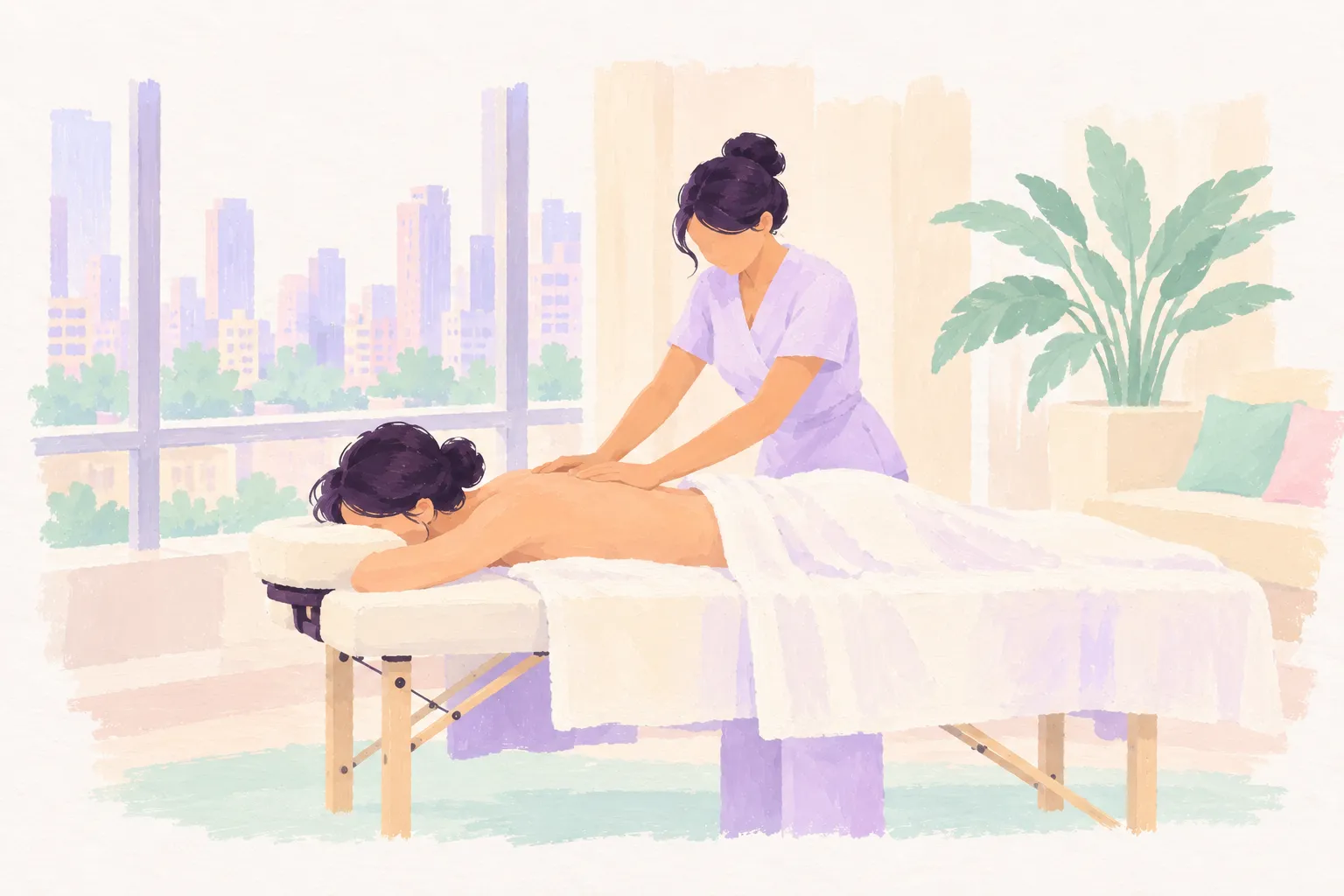
Long hours at a desk can leave the neck, shoulders, and lower back stiff by the end of the day. Massage can feel good for that kind of tension, and it fits into a routine. It cannot fix every back problem. This guide explains what massage can and cannot do for back pain, how to choose a session for desk tension, and when to see a doctor first.
What desk tension usually looks like
Most desk-related tension shows up in the neck, the upper back between the shoulder blades, the shoulders, and the hips. Sitting for long periods keeps the same muscles working in the same position, and many people notice the stiffness only when they stand up. That pattern is common, but it is not a diagnosis. If the pain is new, severe, or unusual for you, get it checked.
What massage can do
A massage can ease muscle tightness and give you a break from the chair. Many people report a short-term sense of relief after a session, and a calmer feeling for the rest of the evening. The effect is usually temporary, so think of massage as one part of managing tension, not a cure.
What massage cannot do
Massage does not repair a disc, correct a spinal condition, or replace treatment for an injury. If your back pain has lasted for weeks, is getting worse, or limits your sleep or your work, speak to a doctor or a physiotherapist. A therapist should not diagnose the cause of the pain, and a good one will tell you so.
Choosing a session for desk tension
For general tension, a Swedish massage is a common starting point. It uses long strokes and can be adjusted from light to firm. If you want firmer work on the shoulders and upper back, the deep tissue page explains the approach. Ask the therapist to focus on the areas that bother you, such as the neck and upper back, and tell them how much pressure you can take.
For most desk workers, a 60-minute session is enough to cover the neck, shoulders, and upper back. A 90-minute session gives more time for the lower back and hips. Our 60 vs 90 vs 120 minute guide explains how to choose the length.
When firm pressure is the wrong choice
Firm pressure can make some back pain worse, especially when the pain is sharp or when the muscles are already sore. If a therapist’s pressure causes pain that does not ease within a short time, say so. The what not to do after a massage guide lists the aftercare mistakes that make soreness last longer.
Warning signs to see a doctor first
- Pain that spreads down one or both legs, or that comes with tingling or numbness.
- Weakness in the legs, or changes in bladder or bowel control.
- Pain that follows a fall, a car accident, or another injury.
- Pain at night or at rest that does not ease with position changes.
- Fever, weight loss, or swelling along with back pain.
If any of these apply, see a doctor before you book a massage. Some of them need urgent care.
Fitting massage into a desk routine
A session helps most when the rest of the day is not making the problem worse. Get up and move during long meetings, set your screen at a height that suits you, and change position often. A massage can work well alongside those habits, but it does not replace them. If your workstation causes the pain, a session will only offer a short break from it.
Team and office options
If your employer or team wants to offer massage, the corporate wellness ROI guide covers how to think about the cost and the benefit. Ask the provider to explain what a session covers, and whether a therapist can work in a room at the office.
Where to book
Many desk workers book near the office or near home. Check the listings in Makati and BGC, or search by area on the search page. Look for a session that lists the treatment and the length, and read the detail before you book.
If you would rather not travel after work, a home visit may suit you. See home service massage in Makati, and read the in-home massage checklist before the therapist arrives.
What it costs
Most Metro Manila massages we could verify fall between PHP 500 and PHP 1,500. Compare the total for the same length and treatment, and include any service charge or tax. Our massage price guide explains how to compare per-hour and per-session prices.
Common questions
Is massage good for back pain? It may ease tension and give short-term relief for some people. The evidence for low-back pain is weak, so talk to a doctor about persistent pain.
How often should I book? It depends on your pain, your budget, and your doctor’s advice. Many people book occasionally rather than every week, and they track how they feel afterwards.
Should I tell the therapist about my back? Yes. Mention any injury, surgery, pregnancy, or condition before the session starts, so the therapist can adjust the work.
Is deep tissue better for a bad back? Not always. Firm pressure suits some people and not others. Start with a moderate pressure and ask for changes as the session goes on.
Before you book
Note where the pain is, how long it has lasted, and what makes it better or worse. Tell the venue about any injury or condition, and confirm the length and the price. If the pain is one of the warning signs above, speak to a doctor first. Keep a note of how you feel the next day, and bring it up with your doctor if the pain returns.