The ROI of corporate massage & workplace wellness
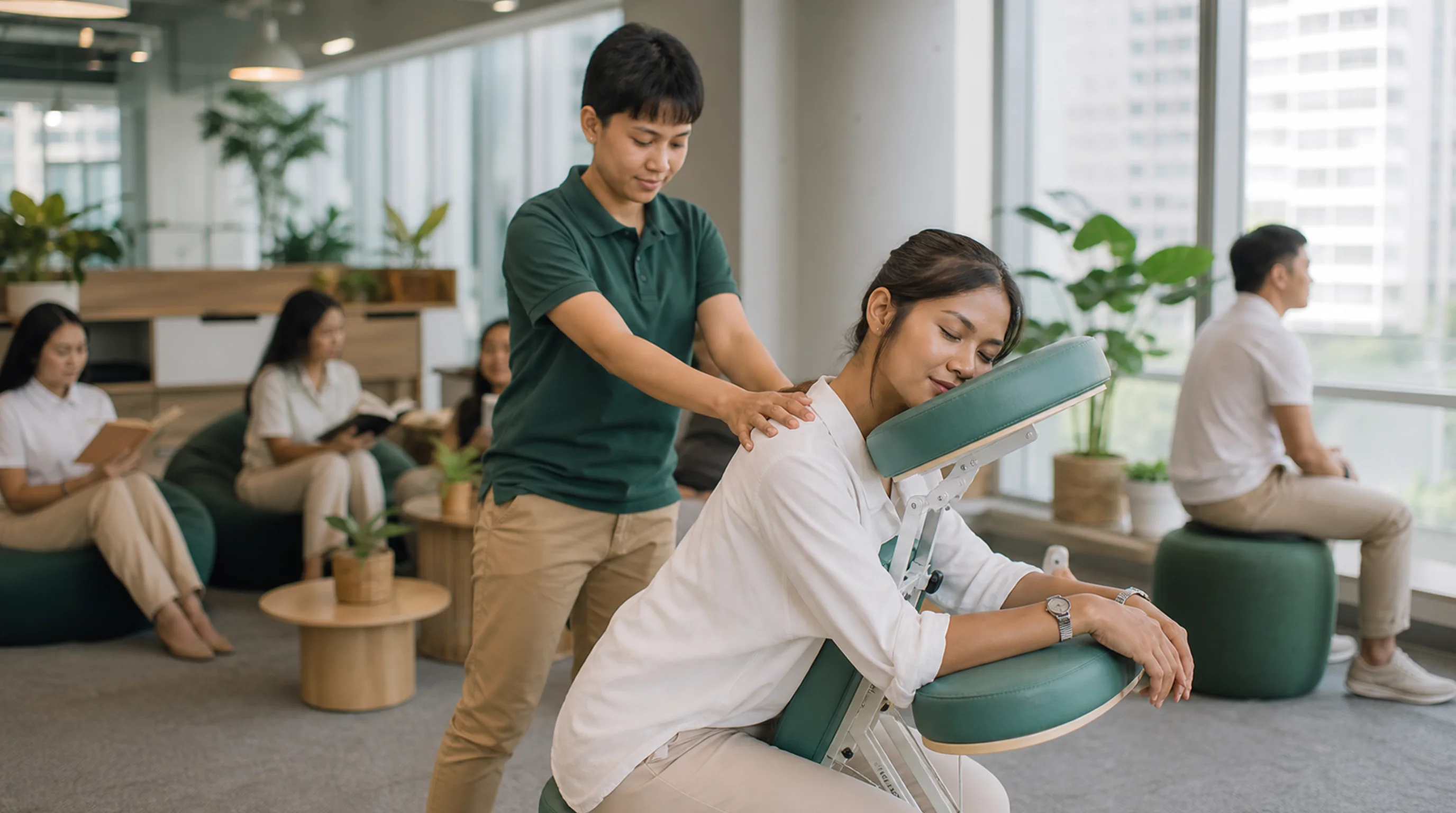
Workplace wellness is often filed under “nice to have.” But when you look at the cost of poor mental health, it is reasonable to test practical forms of employee support. That does not mean massage has a guaranteed ROI: it means a program should start with a hypothesis, a baseline, and a fair measurement plan.
The hidden cost of stress
The World Health Organization estimates that depression and anxiety account for 12 billion lost working days globally each year and US$1 trillion in lost productivity. WHO’s recommended response focuses on organizational risks, manager training, worker mental-health literacy, accommodations, and return-to-work support. Massage is not presented as a substitute for those measures.
What corporate massage delivers
- A voluntary pause: a short session gives participating employees protected time away from the workstation.
- Fewer aches: desk-bound teams accumulate neck, shoulder, and back symptoms. Massage may provide short-term relief for some people, but ergonomics, movement, workload, and clinical care still matter.
- A visible benefit: participation and satisfaction can show whether employees value the offer; do not infer retention impact without measuring it.
How to measure the return
Define the decision before launch: continue, change, or stop. Record total program cost, eligible employees, participation, repeat use, and a short anonymous before/after measure. Absence and turnover can be tracked, but they have many causes; use a comparison period or group when feasible and do not claim causation from a simple before/after change.
Two small randomized workplace studies offer limited signals, not a business case by themselves. One involved 28 workers receiving weekly massage for four weeks and reported reduced strain and blood pressure; another involved 58 emergency-medical-services staff and reported lower occupational-stress scores after eight sessions. Read the 28-person workplace trial and the 58-person EMS trial. Different workplaces, providers, and outcomes may produce different results.
On-site or subsidised?
On-site chair massage can be scheduled into the workday but needs a private-enough space, consent, hygiene controls, and equitable access for shifts or remote staff. Subsidised in-home or studio bookings offer more choice—a relaxing Swedish massage on their own time. Many teams use outside working hours. A pilot can test one model before committing to both. Participation should be voluntary, and employers should receive aggregate usage—not an employee’s treatment details or health disclosures.
The bottom line
Corporate massage can be a valued optional benefit, but ROI must be demonstrated in the organization running it. Start small, protect health privacy, measure participation and a preselected outcome, and publish the limitations alongside the result. Address workload, psychosocial safety, and access to professional mental-health support first.